

New Releases
Profitability analysis of industrial energy storage systems
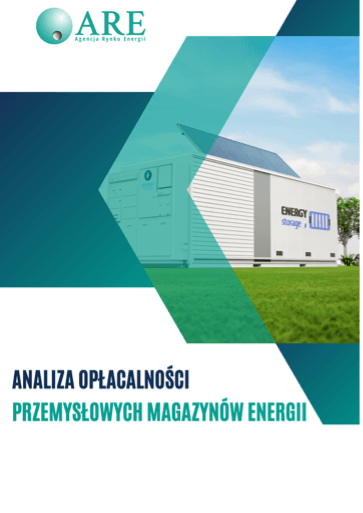
The study will include an analysis of the profitability of investing in industrial energy storage systems; the factors affecting the profitability of the investment will be examined, and the real savings and benefits resulting from the investment will be indicated. The analysis will also answer the question: when can a return on investment in an industrial energy storage system be expected?
In an era of intensive energy transition, industrial energy storage systems are playing an increasingly important role as a flexible link between variable generation and dynamic energy consumption. With the growing share of renewable energy sources—such as photovoltaics or wind power plants—it becomes necessary to buffer surpluses and manage energy precisely in real time. Thanks to functions such as peak shaving (reducing peak power demand), price arbitrage, or participation in the capacity market, energy storage systems are becoming not only a technological tool but also an important element of companies’ business strategies. They enable energy cost optimization, increased self-consumption from RES, and reduced CO₂ emissions. Modern energy storage systems allow enterprises not only to manage energy effectively, but also to generate additional revenues through participation in the energy market, the capacity market, or by providing ancillary/system services. This makes electricity storage an indispensable element of the development strategy of modern, sustainable enterprises.
The study will consider various scenarios for using storage systems as a potential source of revenue and cost savings. Revenues will be calculated across all categories of earning income from an industrial energy storage system, including:
Optimization of the company’s energy consumption profile—by limiting peak power demand (peak shaving),
Increasing self-consumption—using RES installations,
Price arbitrage—reducing the cost of consumed energy without changing energy-use behavior,
Participation in DSR (Demand Side Response) programs and the capacity market—generating additional revenues
Subsidies and investment incentives—funding from NFOŚiGW, FEnIKS, regional funds, green loans, operating leasing.
Energy transition of Polish and European energy groups
 The purpose of the study is to provide the Client with consolidated information on the strategies and transformation plans of energy groups operating on the domestic market and in the European environment.
The report will present the long-term strategies and plans of the largest players on the Polish and European energy markets, placing them in the appropriate market context and relating these plans to the EU’s long-term energy and economic policy. The study also discusses the European and Polish electricity markets, in particular the structure of the electricity generation mix and the structure of energy trade in Europe.
In our view, the study prepared in this way will be a valuable source of information on the competitive environment in the energy sector.
An indicative scope of the study is presented below.
- European electricity market
- Electricity generation in EU countries,
- The EU Emissions Trading System (EU ETS),
- The EU’s 2030 targets and further plans of the European Commission,
- Electricity prices in EU countries,
- Electricity trade on the European market.
- European energy groups
- Strategies and development plans of energy groups – transformation towards low- and zero-emissions,
- Analysis of selected strategic documents – decarbonisation, new technologies and business models, diversification of the energy portfolio, international expansion and alliances.
- Polish electricity market
- Structure of electricity generation,
- Wholesale and retail electricity prices,
- International trade,
- Planned investments in the energy sector.
- The largest companies operating on the Polish electricity market
- Energy transformation in the documents and policies of Polish energy groups – investment priorities and new business models.
- Comparison of Polish companies and European energy groups
- Structure of operations of European groups,
- Operating efficiency of Polish and European energy groups,
- Debt of European energy groups.
- Structure of operations of European groups,
- Operating efficiency of Polish and European energy groups,
- Debt of European energy groups.
Natural gas market for industry – analysis of sales prices and trends (2022–2025)
 The offered study will constitute a comprehensive and expert analysis of the natural gas sales market for industrial customers, covering the formation of sales prices in the years 2022–2025. The analysis will concern gas sellers' offers addressed to end customers from the industrial sector and will be carried out on the basis of reliable reporting data.
The period covered by the analysis was characterised by significant volatility in market conditions, resulting from the unstable situation on European natural gas markets, dynamic regulatory changes, and interventional measures by public authorities. These factors had a direct impact on the level and structure of gas sales prices, the commercial terms of offered contracts, and the purchasing strategies employed by industrial customers.
This report will present in a systematic manner how the pricing policies of companies selling gas to end customers evolved under conditions of heightened market uncertainty, and what consequences this had for gas costs borne by the manufacturing sector. The study will enable:
- assessment of the competitiveness of the domestic natural gas sales market,
- identification of key price trends and structural changes,
- comparison of pricing conditions over time,
- support for decision-making processes in the area of gas cost management and gaseous fuel procurement planning in enterprises.
The analyses will be based on data from the reports of natural gas trading companies, which will ensure a high level of reliability, comparability, and practical usefulness of the presented results.
The electricity market for industry – analysis of selling prices and trends (2022–2025)
 The purpose of this study is to present the development of electricity selling prices (excluding distribution costs) in the years 2022–2025, offered by trading companies to end customers from the industrial sector, connected to medium- and high-voltage networks. The analysis focuses on identifying the main price trends and changes occurring in the pricing policies of energy companies.
The years 2022–2025 were characterized by exceptionally high variability in electricity market operating conditions, resulting from a number of external and internal factors. Among the most important determinants are:
- instability on European wholesale energy markets,
- numerous regulatory changes at the national and EU level,
- state interventions.
These phenomena were directly reflected in the sales policies of trading companies, which — in conditions of limited market predictability — adjusted the structure of their commercial offers, including contract length and the level of price risk. As a result, the purchasing strategies of industrial enterprises seeking stable and competitive energy procurement conditions also changed.
The study will cover the following topics:
- Market and regulatory background – analysis of key macroeconomic, commodity, and regulatory factors influencing energy price formation;
- Analysis of electricity selling prices for industry – a compilation of selling prices for representative groups of trading companies, including a breakdown by voltage groups. The price distribution analysis will use, among other things, positional statistical measures such as the mean and quartiles (including the median), enabling identification of trends and assessment of electricity price variation;
- Final conclusions – identification of main tendencies enabling an assessment of the level of competitiveness in the market.
The report will serve as a source of reliable input information for companies planning electricity purchases in the nearest billing periods, for assessing the level of competitiveness on the domestic electricity sales market, and may also be used for comparative analyses of energy costs for the manufacturing sector.
Training: Electromobility and Electric Vehicle Charging – Market, Requirements and Implementations
 The aim of the training is to provide a practical presentation of electromobility from a business and operational perspective. Participants will learn the differences between public and non-public charging, understand what the charging service delivery process looks like, and what requirements and decisions stand behind the implementation of infrastructure in various types of facilities.
The programme combines market context with an implementation approach, without going into excessive technical detail. During the sessions, we organise the basic concepts, discuss roles and responsibilities in the charging ecosystem, and then move on to the key elements of implementation: preparation of the electrical installation and approach to scalability, safety and fire protection (with particular focus on underground car parks), as well as legal formalities, including the role of the Office of Technical Inspection (UDT), the Electromobility Act, and the EPBD as a regulatory horizon for buildings. The training combines structured knowledge with practice; the topics discussed are illustrated with examples from real implementations and typical scenarios encountered in companies and various types of facilities.
Contact:
Agnieszka Siara
tel. 22-444-20-77
mail: marketing@are.waw.pl
Training: Designing and implementing a nuclear power plant: a practical guide
 The aim of the training is to provide a practical overview of the nuclear power plant design and implementation process from an investment, technological, and organizational perspective. Participants will learn about the key stages of the nuclear project lifecycle — from the investment decision and technology selection, through design and construction, to commissioning and operation — and will gain an understanding of the decisions, risks, and regulatory conditions involved in carrying out this type of investment.
The programme combines a strategic perspective with the practice of managing a large infrastructure project, without going into excessive engineering detail. During the training, we clarify the basic concepts related to nuclear energy, discuss the roles of the investor, technology suppliers, contractors, and regulators, and then move on to the key elements of the implementation process: site and technology selection, preparation of documentation and obtaining administrative decisions, schedule and cost management, as well as quality assurance, nuclear safety, and compliance with regulatory oversight requirements. The training demonstrates what managing a nuclear power plant project looks like in practice, drawing on experience from international investments, typical contract models, and the most common challenges faced by investors and their teams.
Contact:
Agnieszka Siara
tel. 22-444-20-77
mail: marketing@are.waw.pl
Training: Natural gas in power generation and district heating
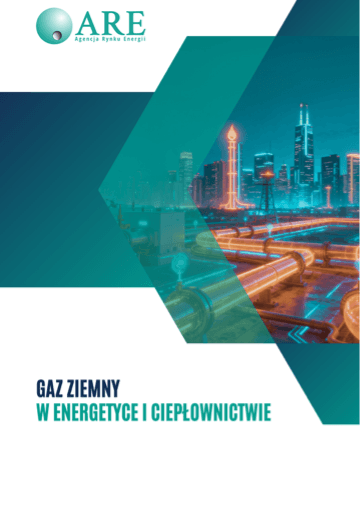 The aim of the training is to provide a practical overview of the role of natural gas in power generation, district heating, and industry in the context of the energy transition and changing market and regulatory conditions. Participants will learn about the entire gas value chain — from extraction and supply, through infrastructure and trading, to its use in energy and heat generation and alternative fuels — and will gain an understanding of the business and regulatory decisions shaping today's gas market.
The programme combines a market perspective with the practice of operating in the gas sector, without going into excessive technical detail. During the training, we clarify the basic concepts related to hydrocarbon geology and extraction, discuss the mechanisms of the domestic and global gas market — including contracts, logistics, storage, and the role of LNG — and then move on to key issues related to transmission and distribution infrastructure, gas trading, regulation, and EU climate and energy policy. Particular attention is also paid to the future role of gas as a transition fuel and as a feedstock for the production of green gases: biomethane and hydrogen. The training combines structured knowledge with market practice, showing how these processes affect investment decisions, energy security, and the strategies of companies operating in the power generation and district heating sectors.
Contact:
Agnieszka Siara
tel. 22-444-20-77
mail: marketing@are.waw.pl
Training: Electrification of municipal and industrial heat plants. Harnessing flexibility potential within sector coupling
 This training on the electrification of district heating and industry is a practical guide to one of the key directions of the energy transition in Poland and Europe. The programme was developed by experts from the Institute for Renewable Energy and the Energy Market Agency, combining system-level, market, and technological knowledge.
During the training, participants will learn about the regulatory and market conditions for electrification, the role of flexibility in the National Power System, the principles of purchasing and contracting electricity, as well as power-to-heat technologies, heat and energy storage, and the integration of RES with district heating and industry. Particular emphasis is placed on the use of sector coupling mechanisms to reduce energy costs and enhance security of supply.
The training is aimed at managers and specialists in investment, district heating, energy, and industry who wish to consciously plan the electrification of processes, improve cost efficiency, and harness the flexibility potential of demand response in the new energy market model.
Contact:
Agnieszka Siara
tel. 22-444-20-77
mail: marketing@are.waw.pl